
The Scheme of Work Management form is used to create a new scheme of work.
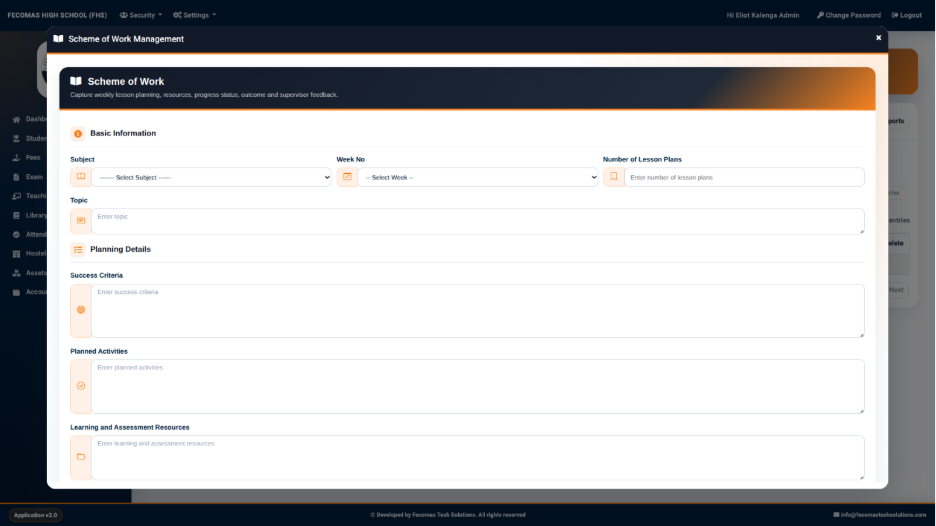
The form is divided into sections that organize the information required for a teaching scheme.
Basic Information
The Basic Information section contains the primary information used to identify the scheme.
The available fields include:
- Subject — Used to select the subject for which the scheme is being created.
- Week No — Used to select the teaching week.
- Number of Lesson Plans — Used to specify the number of lesson plans associated with the scheme.
- Topic — Used to enter the topic to be covered during the selected week.
The subject and week selections establish the academic context of the scheme, while the topic describes the teaching content planned for that period.
Planning Details
The Planning Details section contains information used to describe how the topic will be taught and assessed.
The available fields include:
- Success Criteria — Used to define the criteria that will be used to determine whether the intended learning has been achieved.
- Planned Activities — Used to describe the activities planned for the lesson or teaching period.
- Learning and Assessment Resources — Used to identify resources required for teaching and assessment.
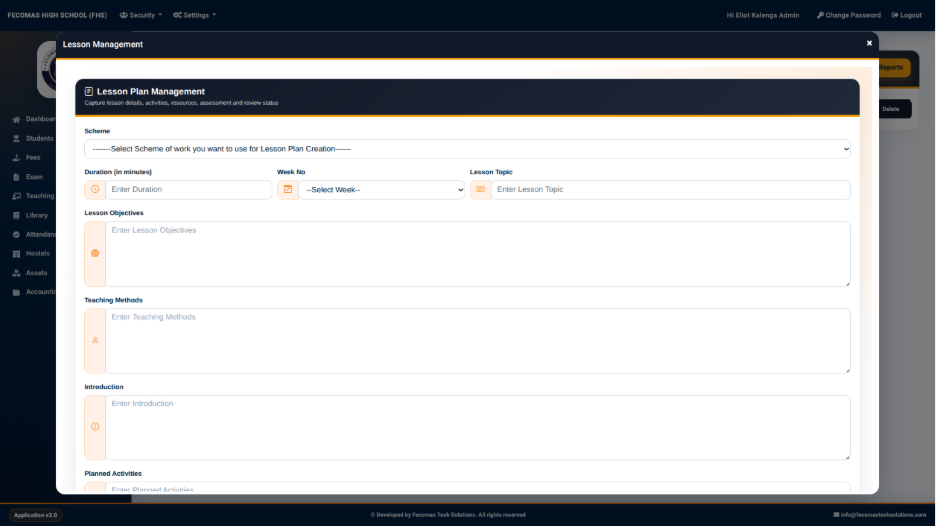
These fields provide the information needed to describe the intended teaching activities and the resources required to support them.
Scheme Outcome and Comments
The scheme management form also provides fields for recording the results and progress of the planned teaching activities.
The available fields include:
- Scheme of Work Outcome — Used to record the outcome of the planned scheme.
- References — Used to record references associated with the scheme.
- Remarks — Used to provide additional comments.
- Complete Status — Used to indicate the current completion status of the scheme.
- Term — Used to select the academic term associated with the scheme.
- Completed Date — Used to record the date on which the scheme was completed.
- Supervisor Comment — Used to record comments provided by a supervisor.